
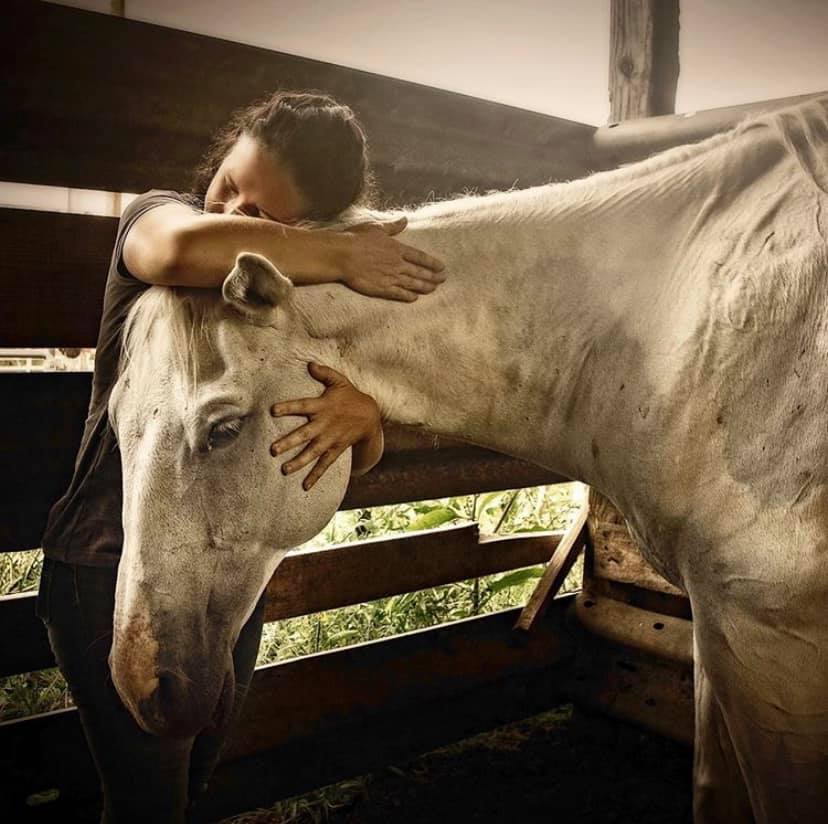

Rescuing horses from auctions (the beginning of the slaughter pipeline) is heart-wrenching work. When we go to auctions, we rescue as many horses as we can that are in the slaughter price range. We rescue the horses that nobody else wants except the kill buyers. It doesn’t matter how old they are, how crippled they are or how emaciated they are, we know they are precious animals who need our compassion. We believe that every animal should be treated with respect and kindness no matter what. Sometimes when we get all the horses back to our shelter and the veterinarian examines them we find so many health problems that all we can do is say goodbye to them. I know it’s the kindest thing to do, but it never makes it easy. I have to realize that somebody else failed these horses, it wasn’t me. I’m the one rescuing them from a horrible situation and just trying to make their lives the best I can, even if it’s for a short time.

After the last auction rescue we did, a lot of the comments I saw on our Facebook page made me feel disheartened. People just don’t get it I kept thinking. What am I talking about, well people just don’t seem to get that so many horses at auction are sold for slaughter. The saying is from Stable to Table in 7 days. We rescued 37 horses last month from auction, there were almost a hundred horses at the auction. The comments that bothered me were all the people saying how wonderful it was that we rescued 37 horses and they hoped that the other horses at the auction found wonderful homes too. When you’re at the auction and you watch horses load up onto semi slaughter trucks headed to Mexico and you know the reality of what’s going to happen to those horses and it’s not pretty. I so desperately wish that the horse world could wake up to the reality of what is happening to our horses. When they enter the slaughter pipeline they rarely come out alive. Yes there are a few feedlots out there who offer them for inflated prices on the internet with the threat of shipping in a few days. Many of the horses I see on these feedlot facebook pages were purchased at auction for hundreds of dollars less than they are being offered for. Kill Buyers know which horses they can purchase for resale and which ones they are buying for direct shipment. Often times they will have two different auction numbers keeping these horses on different accounts. So yes a few of these horses ending up with the kill buyers will be saved by good-hearted people spending thousands of dollars to save a horse from a feedlot before it ships. Many of these horses often end up at our shelter because they are purchased from the kill buyers with nowhere to go. We are an Open Door shelter and will not turn away any horse.

According to USDA export statistics, 1,532 horses were exported for slaughter last week, a drop from the previous week when 1,719 horses were exported for slaughter. These horses are sold at auctions before ending up in the export pens, so when we’re at auctions and we save as many horses as we do and then we watch the other horses load up on slaughter trucks headed to Mexico, it breaks our heart when we read these comments about hoping the other horses sold at the auctions will find good homes, it’s just not reality. We wish we could share in the hope that the other horses could find good homes, but it just doesn’t happen often. As you can see from this chart, for slaughter exports are decreasing each year. But that number should be zero for Mexico and Canada.

But why the decrease in numbers since 2012? Public awareness has helped out a lot, people are becoming more responsible with their horses and not letting them fall through the cracks. Gelding stallions and responsible breeding definitely helps too. The European Union has cracked down and made numerous laws restricting horse meat, they only want the purest meat. Horses in the United States are given all kinds of drugs that are not meant for animals for human consumption so the European Union is cracking down. Lastly here are more rescues out there trying to intercept horses from entering the slaughter pipeline and rescues like us that are rescuing them out of the slaughter pipeline.

We’re thankful that the numbers are decreasing, but when we go to the auctions and look into the eyes of so many precious horses, it is devastating. No horse is safe at auction if it is sold in the slaughter price range, about $.50 a pound. With so many horses still being shipped to slaughter, please think about the responsibilities of being a horse owner. If you have a horse you’re no longer able to keep please do everything in your power to ensure that it will not end up in the slaughter pipeline. If you have an older horse who is starting to have medical complications, please be responsible for that horse even if it means euthanasia. Don’t turn your back on your old horse and expect somebody else or the slaughter pipeline to take care of it, that is completely unresponsible! I am so thankful that we are able to rescue so many horses, but it is a bleak future for the ones we do not rescue. I wish everything was a fairyland and every horse at auction would go to a wonderful home for life, but that’s just not the reality of it. Most disappear down the slaughter pipeline and are served up on a dinner table within days. The next time I go to an auction, and we say there are a hundred horses there and we rescue 30, just know that most of the other horses we were unable to save will be exported for slaughter. It breaks our rescue team’s hearts but that is the reality of it. Until the export of horses for slaughter ends in the United States, we will continue to fight to save as many horses as we can from that horrible fate. Tawnee Preisner – Founder and President of Horse Plus Humane Society